Narrated by Sagar Belgaonkar with vivid inputs from Mahantesh Kamble and Raju Nayak)
Event Overview
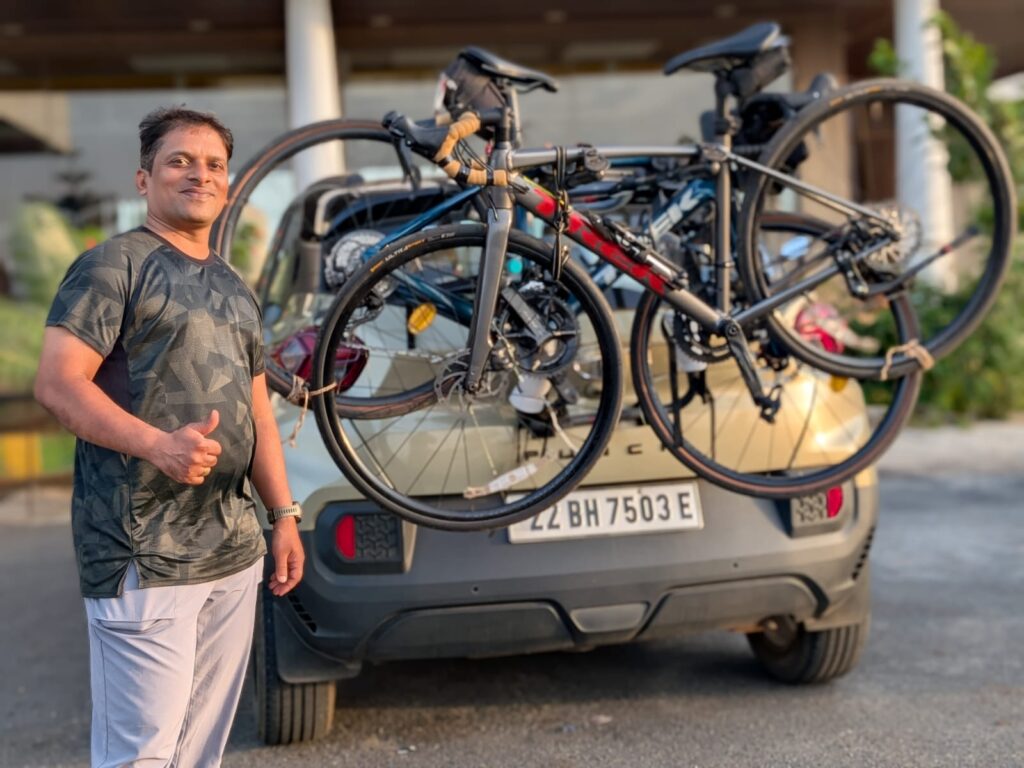
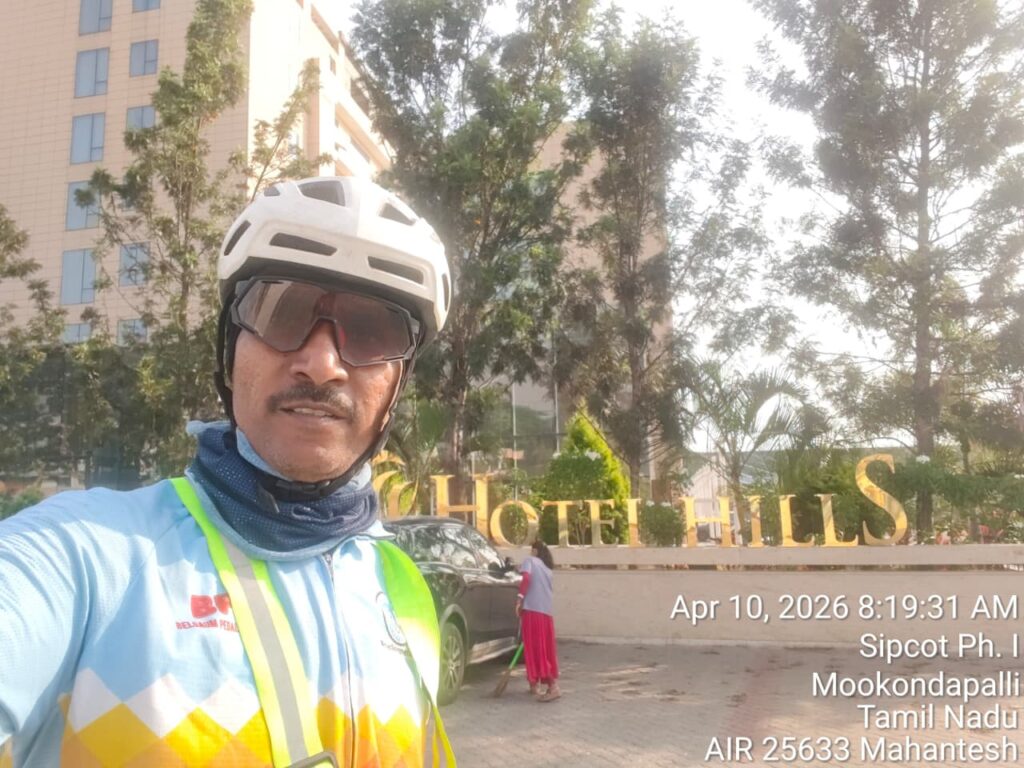
On 9th April 2026, we started the 1000 Km BRM from Bankapur Toll Gate near Hubli at 8:00 AM. The team included Raju Nayak, Mahantesh Kamble, and myself, representing Venugram Cycling Club.
This BRM 1000 Km was organised by the Hubballi Bicycling Club. The route was from Hubli to Kanyakumari. and we completed it in under 70 hours. To know how we accomplished it, …Read on.
Preparation
I had been preparing for this ride for a few months as part of my goal towards the Randonneur 5000.
Rode 2000+ km over two months
Completed multiple 100 km rides
Did a 200 km and 400 km BRM back-to-back before this event
Trained at different times—morning, afternoon, evening, and midnight
This helped in handling both heat and night riding.
Raju sir followed a structured and practical approach:
Practiced riding in heat, early mornings, and late nights
Focused on self-reliance during rides
Gradual build-up: 100 → 200 → 300 → 400 → 600 km
He consistently emphasized that riders should be able to manage on their own, especially during night stretches or in remote areas.
Mahantesh also followed a structured preparation, though he mentioned that he initially had some doubts about registering for the event. Despite having completed two Super Randonneur series, he felt under-prepared due to a few past DNFs. He then committed to a 45-day preparation plan with gradual mileage build-up—from short daily rides to multiple 100 km+ rides and a 400 km BRM.
During this period, he regularly checked in with Raju sir and me to understand if he was on track. He also focused on afternoon rides to adapt to heat conditions.
Ride Strategy
We planned to complete around 400 km in the first 24 hours.
Minimal stoppage time
Charging devices and carrying power banks
Managing comfort for long hours in the saddle
The focus was on maintaining a steady pace and avoiding long breaks at control points.
During the Ride
First 24 Hours
The flag off took place at 08:00 am, at the hands of the Honorable District Commissioner of Haveri.
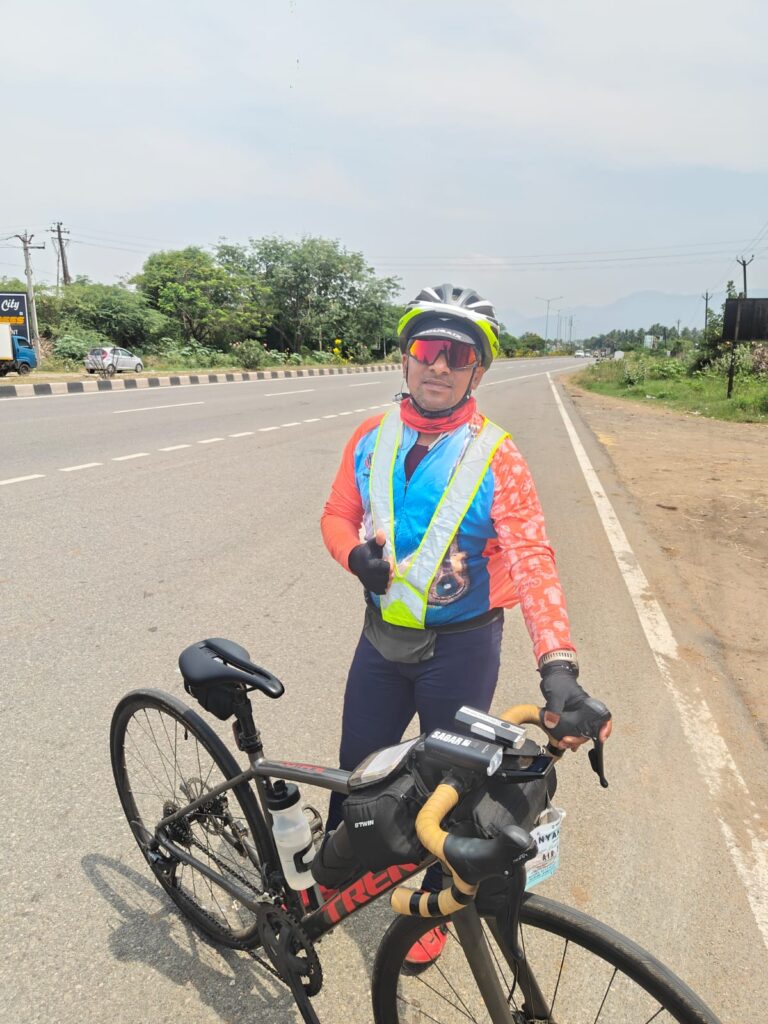
We maintained a steady pace and completed 400 km as planned. The heat was noticeable right from the early part of the ride. As Mahantesh later shared, even within the first 100–120 km, hydration management became important.
The stretch near Chitradurga was particularly demanding due to high temperatures. Despite regular hydration, the effort required to maintain pace was significant. We continued steadily and reached Sira control point, where we took a short break.
Don’t start fast. Let the body adjust.
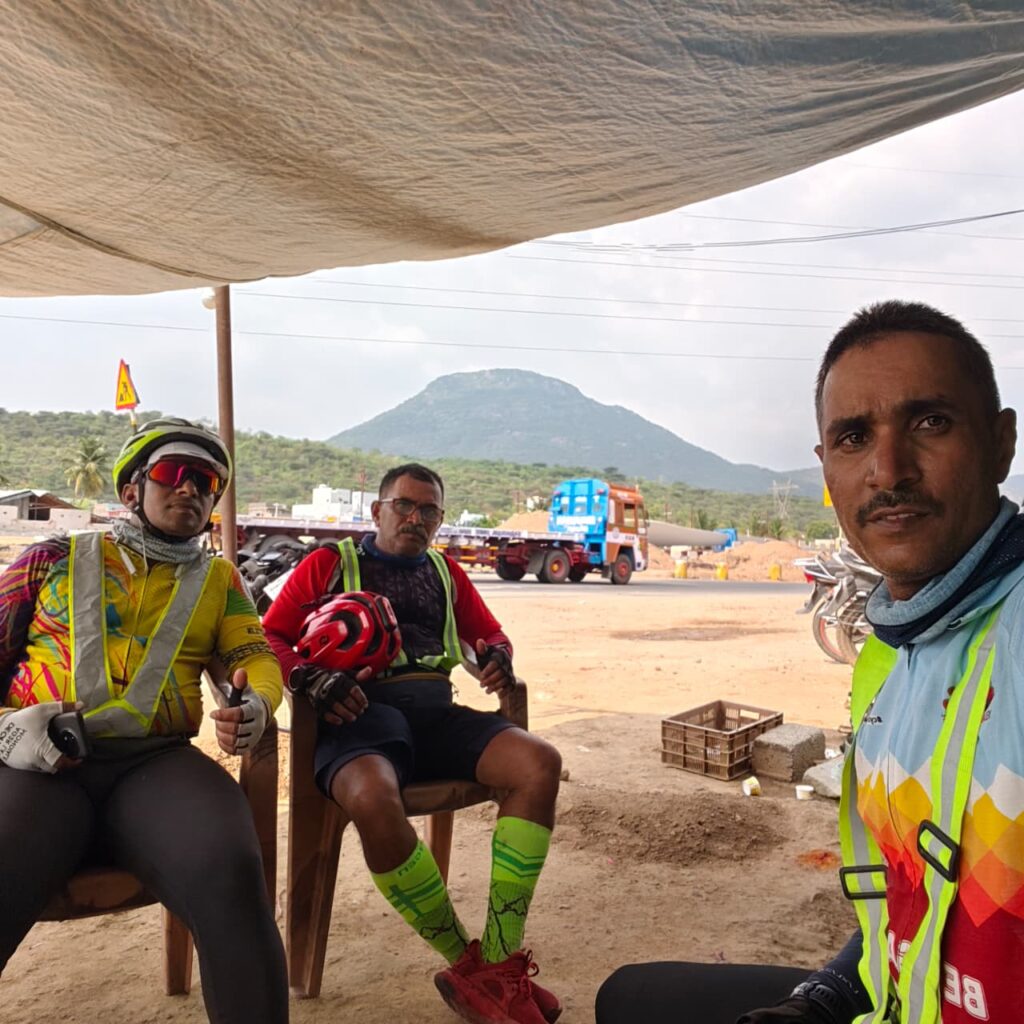
Around the 245 km mark, Mahantesh started feeling unwell, likely due to electrolyte imbalance. He decided to stop at a petrol pump for about 30 minutes to recover and asked us to continue ahead, planning to catch up later.
After resting and cooling down, he resumed at a slower pace. A little later, he met Shivanand sir, took another short break, had some food, and gradually recovered. From that point, as he described, the ride became a mix of ups and downs, but he kept moving and rejoined us at the Nelamangala control point.
Day 2 – Heat Section
The stretch towards Salem was hot, but our prior training in similar conditions helped. We focused on hydration, pacing, and steady progress.
As we entered Tamil Nadu, especially around Dharmapuri, we faced strong headwinds along with heat. Progress required effort, and we managed it with short, controlled breaks.
We reached Salem (536 km) by evening (around 5:25–6:00 PM), took a break of about 90 minutes, had a meal, and prepared for the night ride.
Night Ride
Night Ride
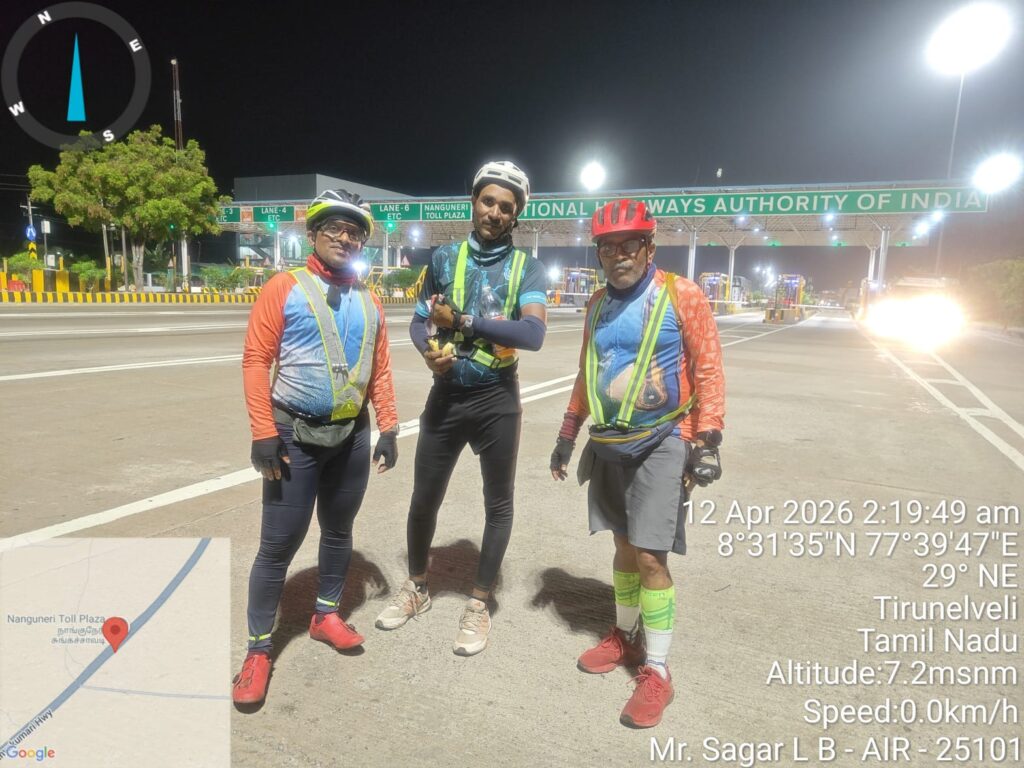
We restarted around 7:30 PM.
Night riding was manageable in terms of temperature, but traffic was heavy in some stretches. We had to stay alert due to continuous vehicular movement, along with headwinds and crosswinds.
At certain stretches, water availability was limited, and we relied on available resources, including snacks, to maintain energy levels.
We continued steadily through the night.
Day 3 – The Final Phase. No looking back now.
By morning, we reached Dindigul and stopped for breakfast before continuing toward Madurai.
As the day progressed, the heat returned, and we maintained a controlled pace. At an afternoon control point, we took a longer break before starting the final stretch toward Kanyakumari.The last night was challenging due to traffic on flyovers and increasing fatigue. We reached the final control point, about 60 km before the finish, around midnight. After a short rest and refreshments, we started the final leg.
Stick to what you practiced. Don’t try anything new which might risk your Finishing.
Finish
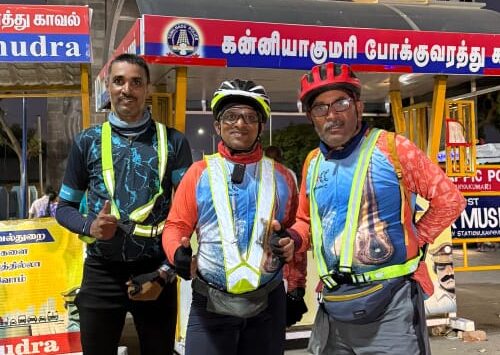
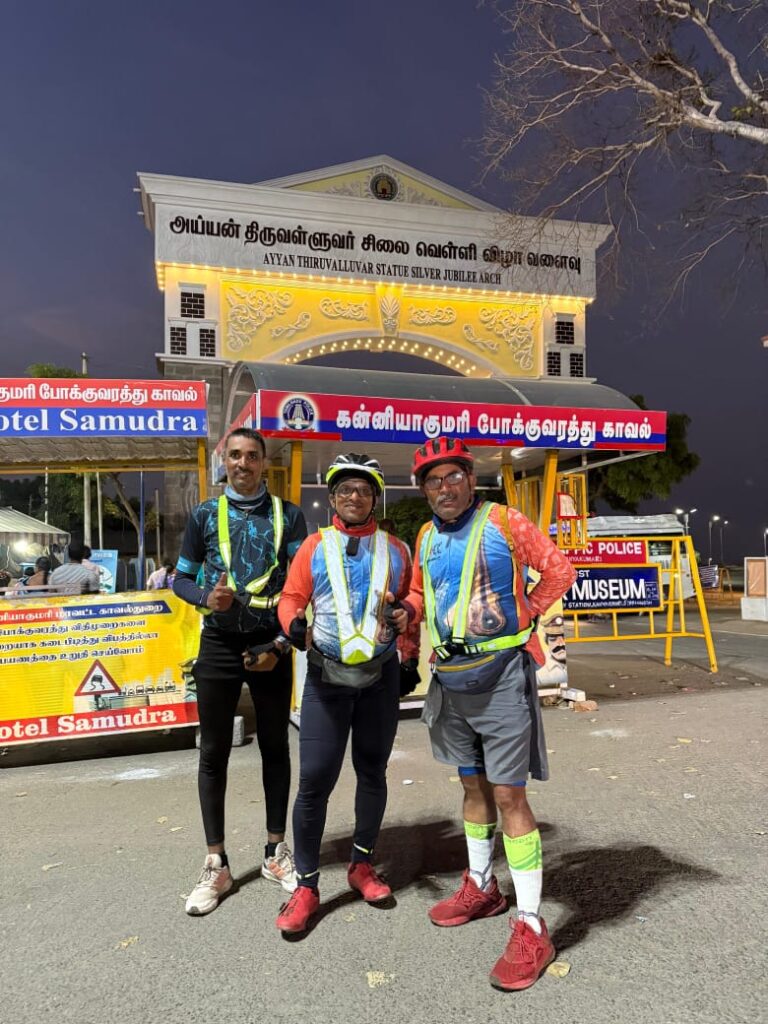
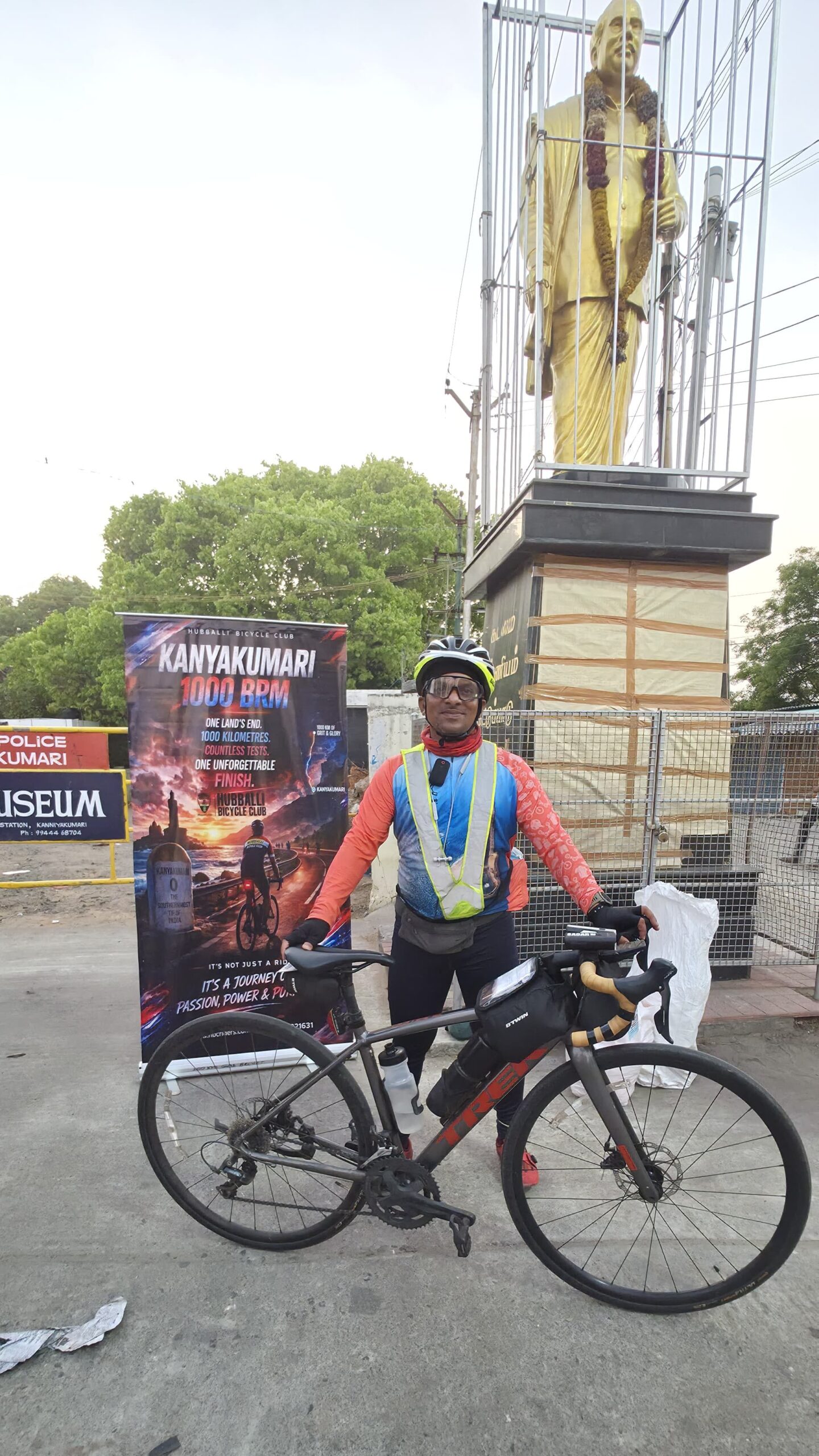
We reached Kanyakumari at 5:42 AM.
For all of us, it was a satisfying finish—especially completing safely and within the qualifying time as a team.
Standing at Karunadu Point, I watched a breathtaking sunrise over the confluence of the three seas. The orange hues over the Vivekananda Rock Memorial made every midnight mile and every afternoon climb spent in training, worth it.
Key Takeaways
Train across different conditions (heat, night, early morning)
Build distance gradually
Be self-reliant for mechanical issues
Practice food and hydration in advance
Avoid experimenting during the ride
Manage pace—don’t go too fast early
Minimize time at control points
Plan basics like charging, lights, and gear
Acknowledgements
Our Families —for their unwavering belief and support
Venugram Cycling Club for motivation and guidance
Hubballi Bicycling Club for organizing the event
Support team: Shettappa Prirangi, Thimmesh, Shivanand Dandvatimath, Prasanna Joshi, Amit Hosur

Congratulations
Great achievement
Nicely penned… Great experience…Missed it badly…
Fab stuff , all of you !!